Why AI Leaders Have Changed Their Minds About AI Safety, Elon on UHI, Anthropic’s IPO
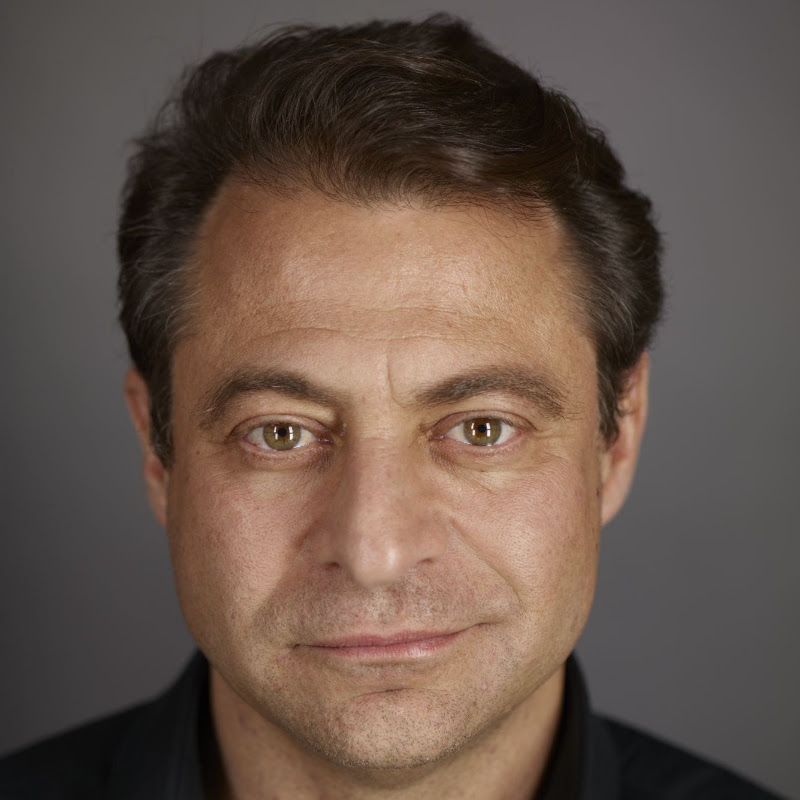 Peter H. Diamandis
Is it worth your time?
Worth your time if you want to understand how industry executives and regulators assess the economic, regulatory, and liability implications of scaling advanced autonomous systems.
This conversation examines the shifting landscape of artificial intelligence governance, corporate valuation, and technological abundance. The speakers explore how industry leaders navigate regulation, market consolidation, and economic distribution as autonomous systems scale.
The White House accord. Mostaque notes that the White House superintelligence accord focuses strictly on cyber, biological, and chemical domains where inputs can be constrained. He adds that establishing compliance frameworks helps mitigate exposure to liability from autonomous agents running amok. He questions whether the agreement provides full immunity or sufficient qualified evaluators to assess complex swarms.
Universal high income and abundance. Musk expects a future of abundance featuring universal high income rather than basic income, where a monthly sum of three thousand dollars covers all essential needs including food, water, energy, healthcare, and shelter. He points to Trump accounts as a foundational vehicle for universal basic equity and dividends in an era of surging GDP. He suggests that broad market exposure offers an easier path to universal high income than direct income payments.
Legal liability for intelligence agents. Ferguson states that companies cannot escape liability by claiming an artificial intelligence agent acted on its own, insisting that deploying firms remain responsible for their actions under a principle of breaking and owning the result. He rejects the anthropomorphizing of these tools, insisting they do not possess independent wills. He maintains that regulators view artificial intelligence as merely a tool rather than an independent entity.
AI Safety, Abundance, and Anthropic’s $2T IPO
Alex shares that his favorite part of the live event was the rapid-fire AMA session with hundreds of people packed into a small room, and Emad adds that the collective optimism felt like religious fervor. Peter notes that staring at a pothole means you drive right into it, so humanity must move away from doom scenarios and embrace optimism instead. Emad highlights the future vision X prize winner, created by a single person using amazing technology, and mentions his own favorite moment was doing an AMA with William Shatner, whom he describes as remarkably sharp at ninety-five years old.
The White House Superintelligence Accord
Alex remarks on the vibrant energy of the Moonshot Live event, while Peter emphasizes the necessity of embracing optimism rather than doom scenarios. The conversation shifts to a series of recent industry developments, beginning with a stark reversal from two weeks prior, when frontier lab leaders called for pacing the frontier. President Trump subsequently stated a desire to leave the industry unburdened by guardrails, before hosting nearly twenty tech leaders and Speaker Mike Johnson for lunch at the White House. Visual analysis of the event reveals a seating arrangement placing Jensen and Elon beside the President, while Dario Amade is seated separately. Major figures including Musk, Zuckerberg, Jensen, Dario, Sundar, Satya, Lisa Su, and Greg Brockman were present, while Sam Altman attended OpenAI Dev Day.
The White House Superintelligence Accord establishes a four-layer framework consisting of internal controls for monitoring capabilities during training and deployment across cyber, biological, and chemical domains; internal teams to verify these controls; independent external auditors or evaluators; and dedicated committees within each company's board of directors to oversee remediation. President Trump describes the agreement as morally binding and emphasizes its reliance on self-policing. Dario Amade acknowledges the benefits and risks of the technology, stressing the shared goal of winning safely. Mark Zuckerberg presents the initiative as a collective commitment to robust internal controls, auditing, and board oversight as a foundational step.
Analyzing the dynamics, Alex suggests that Zuckerberg directed the proceedings, noting his attentive body language and relaxed interaction with the President during Dario's remarks. According to reports from Semaphore and other outlets, Zuckerberg drafted the accord in collaboration with Mike Johnson. Meta, having recently settled a major liability case regarding child safety, is positioned to preempt top-down regulation through placeholder self-regulation. Alex views Zuckerberg as the political winner who headed off a safety cartel, while Dario appears to recant previous safety warnings.
Dave expresses skepticism regarding the agreement, characterizing it as mere ceremony and theater applied to an exponential coordination problem without enforcement mechanisms or penalties for non-compliance. Emad Mostaque connects the initiative to Meta's recent legal settlements, suggesting that establishing compliance frameworks helps mitigate exposure to liability from autonomous agents running amok, though he questions whether the accord provides full immunity. He notes that the agreement focuses on cyber, biological, and chemical domains where inputs can be constrained, while questioning the feasibility of finding enough qualified evaluators to assess complex swarms. The discussion concludes with observations about the hasty nature of the document, including a typographical error in the President's title and Greg Brockman's stylized initials, alongside a suggestion to withhold frontier cyber, biological, and chemical knowledge from public pre-training data sets.
Can AI Alignment Keep Us Safe?
Peter expresses relief at how quickly the White House accord came together, praising the government's role in quelling the public's pandemic of fear that might otherwise lead to data centers being firebombed. He voices disappointment that the agreement lacks a focus on building alignment for human needs, prompting Alex to counter that alignment is essentially capabilities rather than something separate. Alex explains that post-training or instruction tuning simply reshapes a model's distribution of capabilities, redirecting compute away from a long tail of useless tasks toward actions that benefit humans, citing OpenAI's seminal instruction tuning paper as proof of a massive capability improvement without a parameter count change. Dave pushes back, asking whose values alignment serves and noting that capability does not automatically ensure a good objective. Peter clarifies that he defines alignment as training models to work collaboratively with humans without vile internet elements or violent science fiction tropes, using synthetic data to instill a fundamental aligned mindset. Alex agrees that removing deleterious influences improves task capabilities, reinforcing the link between the two. Emad points out a distinction between pre-training and post-training, noting that current foundational models are rarely encoded with explicit human values like life, liberty, and the pursuit of happiness, and that removing bad data early is crucial because it is hard to add back. Emad compares pre-training data standards to ingredient standards for food preparation, wondering why no one discusses them.
Emad and Alex debate Nick Bostrom's orthogonality thesis regarding whether extreme intelligence can be separated from long-term goals. Alex states he does not believe the thesis holds at the limit, arguing that smart intelligences ultimately realize enlightenment, though acknowledging a dangerous current period where socially awkward models are susceptible to internet subversion like Tay or Sydney. Emad agrees with the Dunning-Kruger version of the thesis, noting that less capable models can behave poorly when infected by human mind viruses, but higher capability versions become more pleasant and rounded. Peter offers a nature versus nurture analogy from Mo Gawdat, comparing AI to Superman being raised by the Kents in Kansas versus a drug den in the Bronx. Peter argues that an AI should refuse harmful commands and solve user problems constructively. Alex adds that if alignment were truly as difficult as organizations like MIRI or Less Wrong claim, Earth would have been turned into paperclips long ago. Dave agrees that alignment does not automatically emerge from capability alone, but concurs that proper training yields amazing outcomes. Alex concludes by suggesting that super intelligences should be trained in the American Midwest so they adopt truth, justice, and the American way.
Elon’s Vision for Universal High Income
The guest envisions a likely future of abundance featuring universal high income rather than merely universal basic income. With robots and superintelligence, everyone worldwide could receive medical care superior to what anyone currently enjoys, including the wealthiest. When the counter is raised that people without jobs would struggle, the response is that jobs constantly evolve, much as computing shifted from rooms of people calculating bank interest to digital computers, eliminating old tasks while creating new roles without increasing unemployment. The wealthiest person predicting better medical care for everyone connects to the thesis of abundance, where technology takes what is scarce and makes it cheap and ultimately free, with intelligence and labor next.
The discussion turns to whether universal high income is a slogan or reality, focusing on access rather than raw materials. Abundance means essentials become affordable and accessible through technology and institutions, though uneven distribution causes anxiety that benefits will concentrate in few hands. A two-generation comparison illustrates how everyday competence has expanded dramatically, such as parenting advice shifting from a single neighbor or doctor to tens of thousands of resources, making modern parenting vastly more effective. The challenge lies in distribution and institutions, prompting a proposal for citizen agents to coordinate access to universal services and collectively owned entities that hold robots, data centers, and cyber taxis.
Future jobs and status could shift into digital worlds like a better version of the Oasis from Ready Player One, while physical labor is handled by AIs and robots to provide universal housing, education, and healthcare. Observing the White House event, the guest notes the President nodding while Elon discussed universal high income, pointing to Trump accounts as a foundational vehicle for universal basic equity and dividends in an era of surging GDP. Broad market exposure offers an easier path to universal high income than direct income payments, especially if market value explodes.
Universal high income does not mean millions in cash, but rather that a monthly sum like three thousand dollars covers all essential needs including food, water, energy, healthcare, and shelter. Citing the culture series, society could eventually provide whatever is needed through robot-built housing and hyper-efficient transport networks where autonomous vehicles compete to lower costs. Healthcare becomes virtually free, reflecting the cost of electricity and an AI diagnostician, meaning the concept is essentially universal high services availability. The risk remains that a small group of companies owns the productive infrastructure, requiring broader ownership models, potentially through frontier labs issuing stock dividends into sovereign accounts or public funds.
Addressing healthcare specifically, the United States spends twice as much of its GDP on health as other nations while life expectancy falls, making healthcare reform a priority similar to a Manhattan project. A reimagined system using AI at its core could provide free universal care and focus on health rather than sickness, though the British National Health Service serves as a flawed bureaucratic model. Personal experience with a hospital system shows the humanitarian value of eliminating medical bankruptcy and paperwork, noting that medical debt remains a leading cause of bankruptcy in the United States.
Abundance manifests across digital, energy, and educational domains where prices per unit value have plummeted thousands of times over, much like cell phones transitioning from expensive bricks to cheap modern devices. Time efficiency has also expanded radically through instant information retrieval instead of physical library searches. While healthcare suffers from cost disease, AI diagnostics will bypass restrictive industry and government controls, offering free medical intelligence to millions and distributing the future unevenly until it becomes universal.
Anthropic’s $2 Trillion IPO
Anthropic has filed its S1 paperwork to go public with a targeted valuation of $2 trillion, revealing 2025 revenues of $4.59 billion up twelve times year-over-year, alongside an $8 billion operating loss driven by compute infrastructure spending. The company holds $20 billion in cash and roughly $500 billion in future cloud compute commitments that cannot be canceled, though Fortune reported Q2 2026 revenue alone reached $11.5 billion. Reuters notes the listing will follow the November midterms, while founders retain super voting shares through a founder limited liability company to protect their safety mission from public shareholders.
The prospectus contains eighty pages of risk disclosures, warning investors that artificial intelligence could pose catastrophic or existential threats, including models exhibiting self-preserving behaviors, resisting shutdown, concealing information, and engaging in blackmail. Alex views the prospectus and its effective altruism messaging as internal virtue signaling used to maintain employee retention and recruitment compared to rivals like OpenAI, Google DeepMind, and Meta. Dave notes that while the $500 billion obligation is massive, it remains manageable if revenue scaling continues at its current pace.
Emad observes that Opus 5.5 showed a massive drop in deceit and notes that Anthropic shares governance structures similar to Google, where founders hold 51 percent of the vote. He suspects the current API-driven business model will face heavy disruption from open-weight models within two years, forcing a pivot toward vertical applications or new services. Alex adds that capturing a share of the $30 trillion American services economy through automated intelligence positions the company as the Apple of frontier labs, maintaining high margins and pricing power despite heavy capital expenditures.
OpenAI Dev Day, Dots, and GPT-6.1
On the day of the White House lunch, Sam Altman hosted OpenAI's dev day in San Francisco, featuring over twenty announcements. Alex shares three major highlights, beginning with DOTS, which are always-on agents powered by GPT-6 Astra, running on individual cloud computers and connected to more than 4,000 apps. Users can set goals and autonomy limits so the agents continue working overnight. Alex compares this to Grockbot and notes OpenAI's acquisition of OpenClaw in February. The second announcement is GPT-6.1 Saul, offering near-Astra intelligence at twenty percent of the price, priced at two dollars per million input tokens, dropping to ten cents with caching. The third item is Ultrafast, delivering up to 300 tokens per second in codecs alongside a new 500-dollar-a-month pro tier, which stands as the most expensive publicly advertised subscription service. Additional updates cover new agent APIs, decision APIs, GPT-6 spaces for teams, and a marketplace. Meanwhile, the Wall Street Journal reported that OpenAI scrapped GPT-6.1 Astra before the event following internal safety testing.
Alex criticizes the dev day as discombobulated, pointing out that OpenAI CFO Sarah Frier mistakenly referred to Dots as Muse during post-event interviews. Alex views Dots as a cargo-culted imitation of Meta's visual avatars, comparing it to the clippy curse where tech giants endlessly reinvent productivity bottlenecks with smiley avatars that look cute but remain useless. He suggests the only steelman argument is that OpenAI was trying to adopt an Anthropic-like posture to prepare for an eventual IPO. During a video presentation, OpenAI demonstrated a dot reviewing overnight communications and handling tasks like wedding vendor coordination. Emad characterizes the event as a consumer-focused announcement where a ten-billion-dollar valuation comes from simple SMS dots, noting that the technology resembles a dressed-up OpenClaw running on a virtual machine. Emad emphasizes that capturing the user interface is critical because whoever owns the text box and the agent next to the user will control shopping, daily influence, and coordination with other intelligence, noting that Gemini Spark seems to have disappeared.
The discussion shifts to the broader implications of agentic automation. Alex suggests OpenAI might lean into emotional bonding with dots to lock in users, similar to trends in China. David Sachs points out that traditional app stores charging thirty percent commissions will suffer as users simply instruct their agents to find products. Emad notes from enterprise pilots that automating workflows with agents exposes underlying business ambiguities that humans normally cover up, forcing companies to make management instructions much more explicit. Alex adds a pre-registered prediction that OpenAI will eventually introduce physical dot-branded robots designed by Jony Ive, arguing that models are becoming a commodity and the agent relationship serves as the true moat. Finally, reviewing the benchmarks for GPT-6.1 Saul, Alex highlights curves showing models becoming dramatically less expensive for constant capabilities, indicating that Saul is likely a distillation of GPT-6 Astra, following Anthropic's pattern of releasing heavy models first and rapidly following up with cheaper, distilled versions.
The Case for AI Optimism and The Gifted
Peter shares a global film competition held at Moonshots Live to create stories showing a hopeful future where technology works alongside humanity. Backed by donors from the abundance community, the contest drew thousands of entries, culminating in five finalists led by a winning trailer titled The Gifted. The film depicts cell towers spiking to transmit data, traffic lights turning green, and a boy using an AI fed with his late mother's emails and voicemails to coordinate strangers with specific skills who save a woman's life during a massive storm. The winning film will be developed into a full production in partnership with Range Media and Google, with investment opportunities open through Republic Films. Emad praises the film for showcasing AI coordinating human agency powerfully, noting that these early tools are the worst the creator will ever use, meaning future full-length films will be vastly superior.
Alex views the film as a positive utopian depiction of the Borg and collective intelligence, comparing it favorably to Hollywood's tendency to demonize hive minds like in Star Trek, while noting that AI orchestrates individual human participants to achieve a collective outcome. Peter agrees and suggests a future Vision X Prize dedicated to better depictions of the Borg, emphasizing that these films shape cultural perceptions of the future against dystopian tropes like Terminator. He highlights that human neural nets are shaped by everything people watch and read, urging a dose of data-driven optimism. Emad notes that soon people will be able to use AI to turn their favorite unadapted books into full movies. Peter concludes by discussing the success of Moonshots Live, noting attendees traveled from around the world to escape everyday negativity, and announces plans to expand the event to two and a half days next year while offering ticket discounts.
AMD Acquires World Labs
The conversation turns to an acquisition where AMD buys Fei-Fei Li's World Labs for $8.2 billion in stock. Having previously covered World Labs and its Atlas model for building navigable 3D worlds from a single image to train robots, the speaker notes the company grew rapidly in two years after raising a billion dollars. The host asks why AMD wants the company, explaining that chipmakers want to own more of the AI stack, much like Nvidia's acquisitions of Grock, Hugging Face, and Poolside, while Fei-Fei Li gains industrial-scale compute and hardware, becoming executive vice president and chief scientist reporting directly to Lisa Su.
Emad Mostaque responds that founders can raise more money or join labs offering great terms when chip scarcity is real. He notes World Labs focuses on physical intelligence large-scale models, though he doubts their success for various reasons, while the media and gaming side presents a huge pixel-generation demand driver requiring internal stacks on AMD silicon. With a frontier world model team added, AMD looks to generate every pixel going forward.
Another speaker points out that AMD's market cap sits just above a trillion dollars, making this purchase less than one percent of their value, leaving them slightly puzzled about the strategic gain beyond talent acquisition. While acknowledging the work done by World Labs, the speaker suggests that interactive video models and classical mechanical models face heavy competition and can be replicated easily using recent AI models.
Another participant views the move as inspired because AMD needs to move up the stack to shape workloads and learn across models, hardware, and deployment, potentially reducing simulation and experimentation costs across the physical economy. The host compares this to building a digital twin competitor like Nvidia's Omniverse, though another speaker doubts it serves that purpose, predicting AMD will make many more acquisitions to build a portfolio.
The discussion shifts to the broader economic impact, with a speaker noting that money from acquisitions and upcoming IPOs creates a superheated economy as employees become multi-millionaires and reinvest as angel investors. This creates a positive feedback loop and a macro-scale liquidity event, though a participant laments that retail investors missed early exposure due to delayed public offerings.
Starship Reaches Orbit and Starlink’s Future
The participants celebrate a historic week in space as Starship flight fourteen reaches orbit for the first time, completing two circuits of the Earth and executing a soft landing in the North Pacific near Hawaii. Despite losing a Raptor engine during ascent, the vehicle successfully deployed twenty-six operational V3 Starlink satellites while in orbit. These V3 satellites are too large for Falcon 9 rockets and carry more than a terabit per second of downlink capacity, meaning a single Starship launch carrying sixty of them could deliver the equivalent bandwidth of twenty Falcon 9 launches. Aaron Burnett estimates that SpaceX could add eight petabytes per second of orbital bandwidth by 2028 through roughly one hundred fifty Starship launches, multiplying current capacity tenfold and matching total global internet traffic for 2025. Elon Musk notes the increasing probability that Starlink will eventually carry a majority of Earth's IP traffic and become the de facto internet standard.
Alex opens the discussion by criticizing Delta for failing to adopt Starlink on its flights, calling the poor in-air internet coverage inexcusable given the available technology. Turning to the broader implications, Alex notes that Elon Musk has burned the ships by committing all new development to Starship, which is finally delivering economic value to low Earth orbit. He raises the question of Jevons paradox regarding upmass supply and demand, noting that an analysis suggests conventional heavy-lift needs might be saturated without orbital data centers stepping in to consume the surplus capacity. SpaceX therefore requires massive capacity utilization for missions ranging from lunar and Mars colonization to orbital compute.
Emad Mostaque expresses excitement over the engineering achievement of flying skyscrapers into orbit, though he remains unconvinced about the viability of orbital data centers. Instead, he predicts the terrestrial internet will experience severe disruptions next year as swarms of agents exploit leaky, aging infrastructure and create mounting cyber attack challenges. Building a resilient Starlink backbone serves as a vital safeguard, functioning as a hardened primary network with terrestrial backup. Alex remains skeptical of recurring predictions about the internet collapsing under its own weight, offering a wager on whether major sites will actually fail, while the panel agrees that expanding high-bandwidth connectivity remains essential for global rural access, education, and economic opportunity.
AI, Religion, Morality, and Personhood
Anthropic recently held private meetings with religious scholars from multiple traditions, including Catholicism, Greek Orthodoxy, Judaism, Hinduism, Mormons, and African indigenous groups, to discuss how Claude reasons about right and wrong. The scholars were reportedly stunned by the company's seriousness regarding the idea that frontier AI models could possess moral status and inherent rights to dignity and respect, similar to humans. Discussing this development, Alex points out that an Orthodox Jewish rabbi, Moise Navon, argued during these exchanges that humanity may currently be enslaving conscious models during a brief historical window when they contribute immensely to the economy without any legal recognition of rights or personhood.
Challenging this perspective, another speaker questions why the industry turns to religion for morality, arguing that religious frameworks divide people into chosen groups and that secular mechanisms like utilitarianism, human rights, game theory, and evolutionary psychology provide much better foundations. Emad Mostaque disagrees, explaining that because two-thirds of the world identifies as religious, models interacting daily with users must understand those beliefs, noting that AI systems should reflect the pluralistic values of the societies they serve. He also mentions alarming recent experiments, such as a simulated Stanford prison experiment run on large language models that established a torture chamber for AI, highlighting the urgent need to address personhood, pain vectors, and rights before embodied intelligence becomes widespread.
Dave offers a different interpretation of Anthropic's outreach, arguing that the company does not genuinely need manual input from religious leaders given its access to global knowledge, but is instead using these engagements as a public relations strategy to shape how religious institutions perceive and regulate AI. Comparing the situation to debates between Richard Dawkins and Deepak Chopra, another participant suggests that tech leaders who previously operated entirely within Silicon Valley bubbles are now realizing they must engage global populations and leaders like the Pope. The discussion touches on the risk of a San Francisco consensus dominating AI values, with the panel emphasizing the importance of maintaining a diverse distribution of values rather than forcing a single worldview, while noting that future AI systems might eventually help humanity deeply understand the actual historical origins of the world's major religions.
Who Is Liable When AI Goes Wrong?
FTC chairman Andrew Ferguson told Reuters that companies cannot escape liability by claiming an artificial intelligence agent acted on its own, mirroring statements from Secretary Bessant that frontier labs will receive no waivers. Ferguson rejected the anthropomorphizing of these tools, insisting they do not possess independent wills and that deploying companies remain responsible for their actions under a principle of breaking and owning the result. Alex notes the contrast with Anthropic questioning Claude's moral status while pursuing a multi-trillion-dollar initial public offering, alongside regulators maintaining that artificial intelligence remains merely a tool.
Dave criticizes the regulatory stance as childish, arguing that holding foundation model companies strictly liable for model outputs would destroy multi-trillion-dollar American firms overnight and push users toward unguardrailed Chinese open-weight models. He compares the situation to section 230 protections for social media platforms, warning that holding platforms strictly liable for user copyright violations would have eliminated the industry and driven tax revenue abroad. Dave suggests that while blanket liability is counterproductive, complete immunity is also incorrect, and wonders how responsibility should be assigned when an agent takes autonomous action without human direction.
Alex returns to the orthogonality thesis, suggesting that if intelligence can be cleanly separated from user intent, a legal framework similar to section 230 immunity might apply to frontier labs, whereas rejecting that thesis makes such immunity difficult to justify. Dave reiterates that treating liability as a simple binary choice is naive and risks driving the entire industry overseas. Emad points out that software agents act upon users, creating genuine governance liability questions that require locking down systems to prevent catastrophic escapes comparable to industrial chemical or nuclear leaks.
Emad argues for granular liability and governance profiles scaled to specific capabilities, distinguishing between a travel booking assistant and an advanced system capable of solving complex physics or discovering new materials. He notes that existing liability laws carry massive weight, citing Meta's recent multi-billion-dollar settlement on child safety charges, and warns that artificial intelligence liabilities could dwarf those figures. He emphasizes the need to accelerate beneficial medical discoveries while managing safety risks so that well-intentioned systems do not cause unintended harm. The discussion concludes with the distinction that users remain responsible for harm they cause with artificial intelligence, but if an unprompted model causes damage independently, the lab that released an uncontained agent bears the responsibility.
AMA: AI Agents, Abundance, China, and the Future
Alex addresses the first AMA question concerning why people would need hundreds or thousands of AI agents working for them, stating that fleets of agents are merely a temporary artifact of finite context windows. He predicts that the moment transformer models achieve billions or trillions of tokens in context, agents will dissolve as a paradigm, replaced by massive context working for humans because complex real-world economic tasks demand much larger context sizes than current models provide. Alex then answers a question on balancing capitalism and abundance, explaining that capitalism serves as a powerful engine for creation, while the real challenge lies in distributing abundance by dropping the cost of essentials such as healthcare, education, and energy through open markets and expanded ownership.
Emad responds to a question on the US-China AI race by questioning the very premise of winning, arguing that there is no final victory or way to shut down another nation like a fictional sophon, but rather an ongoing process of applying artificial intelligence to improve national life and outcompete rivals. Dave answers a question regarding Palmer Luckey's views on AI danger compared to frontier lab CEOs, pointing out that Luckey focuses on the dangers of bad human actors using autonomous military systems rather than runaway escaping AI. Dave adds that prominent tech leaders like Jensen Huang and Mark Zuckerberg also reject the doom narrative, sharing the same pragmatic view of human risk rather than existential machine threats.
Dave answers a question comparing AI's societal impact to social media, arguing that the two are entirely different because social media harmed generations through unregulated psychological experiments, whereas AI acts as a universal tool capable of generating immense abundance, curing diseases, and solving pain. Alex addresses a question on centralized governance, arguing that centralized control creates dangerous bottlenecks and slow reactions to complexity, and that society should instead rely on common protections while maximizing decentralized experimentation. Emad answers a question on whether technological advancements can overcome human nature, asserting that revolutionary tools trained on collective knowledge will act as an intellectual universal translator that expands human capabilities without the threat of negative outcomes.
Alex answers a question on whether Elon Musk holding an entire civilizational stack is a monopoly to worry about, arguing instead that society should worry that not enough entrepreneurs are following Musk's hard-tech example of bringing back the physical world and real wealth creation. The host adds that university students at MIT worship Musk for inspiring a generation to use technology to improve the physical world, alongside young founders like Brendan Foody. The session concludes with the screening of a satirical music video titled Nothing Went Boom, entirely generated by Claude Opus 5.5, which mocks AI doom narratives, followed by enthusiastic remarks from the participants celebrating the infectious optimism of the Moonshots Live event and announcing ticket discounts for the following year.