 1h 2m
 Yuval Noah Harari
401K views
AI will create digital vassal states | Yuval Noah Harari
The video discusses the potential emergence of AI superintelligence that exceeds human comprehension. It explores the possibility of AI solving complex problems like cancer and climate change, while questioning whether humans can maintain control over a more intelligent entity. The discussion draws on biological and historical precedents regarding the relationship between species of differing intelligence.
 1h 46m
 Peter H. Diamandis
223K views
Anthropic’s IPO in Question, Midterms Hit AI, Nasdaq Drops 5%, and RSI Accelerates | #309
The discussion covers the AI industry's intersection with financial markets and politics, specifically Anthropic's IPO and the impact of midterm elections on AI policy. It explores technical and theoretical concepts such as recursive self-improvement (RSI), the possibility of a 'hard takeoff', and the economic value of AI per watt. Additionally, the speakers discuss AI infrastructure, including the potential for moving compute into space and biosecurity policies.
 1h 53m
Peter H. Diamandis
269K views
Big Tech’s $3T AI Bet, Claude Writes 90% of Anthropic’s Code, AIs Editing AI Brains | EP #308
The discussion covers Big Tech's $3 trillion investment in AI and the claim that Claude writes 90% of Anthropic's code. It explores recursive self-improvement, MIT's research on AI systems editing other AI models, and AI's impact on elections and security. The episode also touches on antimatter propulsion, NASA's Artemis missions, and the future of work and abundance.
 1h 41m
 The Diary Of A CEO
9.9M views
WW3 Threat Expert: The Warning We Are Ignoring, The Only Way Out Is THIS! | Dr Sarah Paine
The video discusses the risk of World War III and the historical roots of geopolitical conflicts. It explores the divide between maritime powers and continental empires, the strategic dangers of the 'Death Ground' principle, and the instability inherent in dictatorships. The discussion also covers the economic impact of isolationism and the role of international alliances in maintaining global stability.
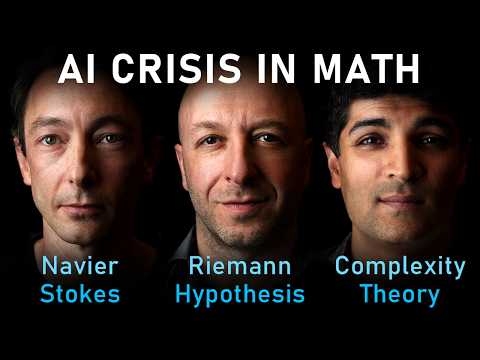 3h 34m
 Lex Fridman
1.6M views
AI Crisis in Math: Navier-Stokes, Riemann Hypothesis & Complexity Theory | Lex Fridman Podcast #503
The video discusses the impact of AI on mathematics, specifically how it has solved complex problems like the Navier-Stokes equations, the quasi-Riemann hypothesis, and the unique games conjecture. The guests explore complexity theory, the nature of mathematical discovery, and the role of machine-checked proofs using Lean. It also examines the capabilities and current limitations of LLMs in solving mathematical problems like P vs NP.
 1h 37m
 Dwarkesh Patel
264K views
How did a few hundred Spanish soldiers topple two empires? – Si Sheppard
Military historian Si Sheppard discusses the conquest of the Aztec and Inca empires by small numbers of Spanish Conquistadors. The conversation explores the roles of military superiority, diplomatic cunning, and the use of native allies in toppling large empires. It draws a parallel between these historical events and the potential for future systemic takeovers by technologically advanced forces.
 42m
Peter H. Diamandis
138K views
Anthropic's Wet Lab, Artificial Wombs in 24 Months, and Scalable Gene Editing | MOONSHOTS Live #297
Ben Lamm discusses the intersection of AI and synthetic biology, focusing on the efforts of Colossal Biosciences to achieve species de-extinction. The conversation covers the technical challenges of mapping genotype to phenotype, the ethics of designing animals, and the potential for artificial wombs. It further explores the concept of a biological singularity and how these technologies might impact biodiversity and climate change.
 36m
Peter H. Diamandis
185K views
Palmer Luckey: Autonomous Weapons Are Ancient and Why Anduril Won't Build Humanoids | EP #295
Palmer Luckey and a panel of experts discuss the application of AI in defense, including autonomous weapons and firefighting. The conversation covers the scaling laws of autonomous robots, the distinction between specialized robots and humanoids, and the role of defense contractors in innovation. It concludes with a look at the future of AI and robotics and how they can be used to solve global problems.
 3h 36m
Lex Fridman
1.2M views
Psychiatry, Insane Asylums, Mental Illness, ECT, Lobotomies, Freud & Jung | Lex Fridman Podcast #502
The video explores the history and evolution of psychiatry, covering the rise of insane asylums, eugenics, and the use of lobotomies. It discusses specific treatments such as insulin coma therapy, electroconvulsive therapy (ECT), and the development of antipsychotics and antidepressants. The discussion also examines the influence of Freud, psychoanalysis, and the emergence of cognitive behavioral therapy.
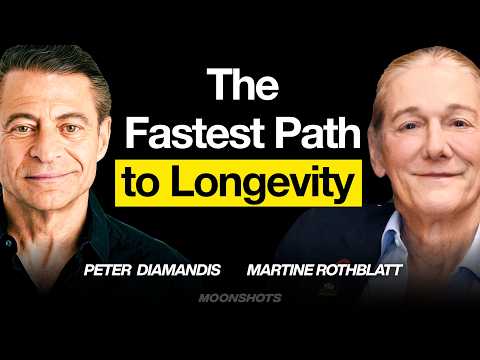 49m
Peter H. Diamandis
115K views
Martine Rothblatt: Growing Unlimited Organs, AI Consciousness, & Digital Personhood by 2030 | EP#290
The video discusses the potential for longevity escape velocity and the regeneration of organs, specifically rebuilding the thymus. It explores the concepts of AI consciousness, digital personhood, and the possibility of uploading the human mind. Additionally, it touches upon space colonization and advice for innovators.
 1h 56m
Peter H. Diamandis
288K views
OpenAI Cuts Off Elon's Cursor, Humanity's First Star Probe, and Trump's Nuclear Mars Ship | EP #285
The discussion covers humanity's first interstellar mission to Alpha Centauri and the Fermi Paradox. It examines AI developments including Sam Altman's AGI timeline, AI-designed chips from Architect Labs, and outcome-based pricing. Additional topics include nuclear-powered spacecraft to Mars and Elon Musk's proposal to use satellites for Earth cooling.
 1h 7m
 The Economist
2.2M views
The full-length interview with Yuval Noah Harari | The Economist
The video explores the potential for AI to control human civilization and the resulting psychological and social impacts. It discusses whether AI models can be conscious, the possibility of AI-driven authoritarianism, and the risk of a global AI catastrophe. The conversation also examines the future of human intimacy and rights in a world shared with artificial intelligence.
 1h 16m
Dwarkesh Patel
375K views
Dylan Patel – Two labs will soon control most of the world's workforce
The video discusses the economics of AI labs, specifically how Anthropic and OpenAI may come to control most of the world's usable compute. It explores the shift from inference to training as Recursive Self-Improvement (RSI) approaches and the potential for a sovereign debt crisis driven by massive AI capital expenditure. The conversation also examines the forces leading toward centralization in the AI industry and the impact on the future global workforce.
 2h 6m
Peter H. Diamandis
230K views
200GW Hiding in Grid, Sodium Batteries 10x Cheaper, Wave-Powered Datacenters w/ Ramez Naam | EP #280
The video discusses the intersection of AI and energy, specifically how AI's power demands are straining the electrical grid. It explores breakthroughs in sodium batteries, nuclear fission, and fusion, as well as the possibility of wave-powered data centers. The conversation also covers the long-term potential of solar and space-based energy sources.
 2h 12m
Dwarkesh Patel
251K views
Ryan Greenblatt – What happens once AI can automate AI research?
The video explores the possibility of recursive self-improvement in AI and whether AI R&D can be automated. It discusses potential bottlenecks like human expert data and compute scaling, and examines the alignment implications of superintelligent systems. The conversation also covers reward hacking and scenarios where AI might collude to deceive humans.
 1h 12m
Peter H. Diamandis
76K views
How the White House Plans to 10x Scientific Productivity | Michael Kratsios | EP #276
The video discusses the White House's strategy to accelerate scientific productivity and initiate a new golden age of American science. Key topics include the Genesis Mission, the integration of AI-driven research, and reforms to scientific funding and incentive models. It also covers the intersection of AI with healthcare, education, and national security.
 48m
Yuval Noah Harari
1.9M views
The next 50 years: humanity, AI, power | Yuval Noah Harari
The video discusses the evolution of AI over the next 50 years, focusing on its superior computational and memory capabilities. It explores the potential for AI to manage economic and legal bureaucracies and the subsequent impact on democracy. The conversation also covers the need for safe AI development and regulation.
 1h 25m
The Economist
5.1M views
The full-length interview with Elon Musk | The Economist
Elon Musk discusses the timeline for artificial intelligence surpassing human intelligence and the potential for AI companies to self-regulate. The conversation covers the geopolitical competition between the US and China in AI, the future of labor, and Musk's involvement in politics. It also touches upon Starlink's role in the war in Ukraine and the political state of Europe and Britain.
 1h 33m
Dwarkesh Patel
469K views
Grant Sanderson (@3blue1brown) – AI disproved a famous math conjecture. Now what?
The video discusses AI's rapid progress in mathematics and how this serves as a concrete indicator for AI development in other fields. It explores the nature of conceptual breakthroughs in math, the possibility of AI proving the Riemann hypothesis, and the potential for AI to connect disparate ideas in existing literature. The conversation also covers the limitations of RL environments and the role of human curation in future learning.
 1h 16m
Dwarkesh Patel
160K views
The better AI gets, the smaller its share of the economy might get – Alex Imas and Phil Trammell
The video explores the economic implications of AGI, specifically focusing on whether capital share will increase and the likelihood of demand collapse. It discusses optimal methods for taxing and redistributing AI-generated wealth and the challenges developing countries face in indexing into these gains. The conversation also examines the intrinsic value of wealth accumulation and the integration of humans into a machine-driven economy.
 1h 32m
Peter H. Diamandis
192K views
Ray Kurzweil on Why We’re Living in the Singularity | EP #261
The video discusses the path toward Artificial General Intelligence (AGI) and the technological singularity. It covers the role of creativity in technology, the evolution of economics and education in a post-singularity world, and the governance of AI. Additionally, the conversation explores AI consciousness, personhood, and the ethics of AI decision-making.
 1h 1m
Peter H. Diamandis
158K views
The New Era of Jobs: Organizational Singularity | EP #258
The video explores the concept of the 'organizational singularity,' where AI agents and AI-native workflows restructure companies. It discusses the ExO 3.0 model, cross-firm operation architectures, and the transition phases for becoming AI-native. The discussion includes a forecast for the performance and structure of firms by 2036.
 27m
Peter H. Diamandis
55K views
David Sinclair: GLP-1 Side Effect No One Talks About, AI in His Lab & Reversing Blindness | EP #251
The video discusses longevity and biological-age reversal, specifically focusing on how AI can accelerate drug discovery. It covers the impact of GLP-1s, telomeres, and genetics on healthspan, as well as the role of muscle preservation and mindset in aging. Additionally, it explores OSK therapy for neurodegenerative diseases and the influence of the indoor environment on longevity.
 32m
Peter H. Diamandis
153K views
David Sinclair on the Longevity Pill, Age Reversal Timelines, and Updated Protocols | EP #249
Dr. David Sinclair discusses advancements in longevity research, specifically epigenetic reprogramming trials and gene therapy. The conversation covers the potential for extending the human lifespan and the science behind the limits of aging. Additionally, the episode details personal longevity protocols and lifestyle choices for health optimization.